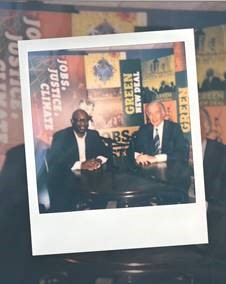
The 2026 United States Senate election in Massachusetts is shaping up as a contest for the Class II seat currently held by Democratic Senator Ed Markey. With the primary set for September 1, 2026, and the general election on November 3, 2026, the race features an aging incumbent facing potential challenges from within his party and speculation about Republican opportunities in a state long dominated by Democrats. Markey, who will turn 80 before the election, secured 66.2 percent of the vote in his 2020 re-election but now confronts questions about his age and effectiveness.
The Incumbent and Calls for Retirement
Ed Markey has served in the Senate since 2013, following a special election victory. He won a full term in 2014 and was re-elected comfortably in 2020. However, at 79 years old as of mid-2025, Markey has drawn criticism for potentially overstaying his tenure. A statewide poll of 750 likely voters conducted September 24-25, 2025, by Advantage Inc. found that 63 percent believe he should not seek re-election in 2026. Markey has declared his intent to run for a third full term, emphasizing his record on environmental issues and progressive policies. As of June 30, 2025, his campaign had raised over $4 million, with $2.5 million cash on hand.
Democratic Primary Dynamics
The Democratic primary is already showing signs of internal division. Markey faces a declared challenger in Alex Rikleen, a history teacher who entered the race with limited resources. Rikleen’s campaign had raised under $30,000 as of June 30, 2025, with about $10,000 cash on hand.
Hypothetical polling suggests vulnerability for Markey. In a September 23-24, 2025, survey of 750 likely voters by Fiscal Alliance, Congressman Seth Moulton led Markey 43 percent to 21 percent, with 36 percent undecided. Among Democratic voters in a similar Advantage Inc. poll from September 24-25, 2025, Moulton held a 38 percent to 30 percent edge. Moulton, a moderate Democrat and Iraq War veteran, has been weighing a primary bid, citing the need for fresh leadership.
Another hypothetical matchup in the Fiscal Alliance poll pitted Markey against Congresswoman Ayanna Pressley, with Markey at 34 percent, Pressley at 30 percent, and 36 percent undecided. Pressley has not indicated interest in running. Congressman Jake Auchincloss has ruled out a challenge to focus on national Democratic efforts.
Republican Contenders and Opportunities
On the Republican side, no major figures have formally declared, but interest is building. John Deaton, an attorney who ran unsuccessfully for Senate in 2024, has publicly expressed interest. Nathan Bech, a veteran, has also entered as a Republican candidate, though his campaign reported no fundraising as of June 30, 2025.
Speculation has centered on former Governor Charlie Baker, a moderate Republican who left office with high approval ratings. However, Baker has stated he does not intend to run. Despite this, hypothetical polls test his viability. A MassINC Polling Group survey of 582 likely voters from October 29 to November 1, 2024, showed Baker leading Markey 40 percent to 34 percent, with 7 percent for other candidates and 19 percent undecided. A UMass Amherst/YouGov poll of 700 adults from February 14-20, 2025, had Markey at 35 percent, Baker at 33 percent, and 33 percent undecided.
Dr. Shiva Ayyadurai, an engineer and entrepreneur, announced his candidacy on October 2, 2025, running as a Republican. Ayyadurai, who has run for office previously, focuses on themes of innovation and anti-establishment reform. His campaign website calls for putting working people first.
Third-Party and Independent Candidates
Several lesser-known candidates have emerged outside the major parties. Philip Devincentis Jr. has filed paperwork as an American Independent Party candidate. Joseph Tache is running under the Party for Socialism and Liberation banner. Morgan Dawicki, an independent, reported raising about $8,000 as of September 30, 2025, with over $5,000 cash on hand.
General Election Polling and Predictions
The race is rated as solidly Democratic by analysts, reflecting Massachusetts’ partisan lean. However, hypothetical general election polls reveal potential openings.
In addition to the Baker matchups, a SurveyUSA poll of 775 registered voters from February 28 to March 4, 2025, showed Markey leading Deaton 45 percent to 26 percent, with 30 percent undecided.
These early surveys highlight Markey’s challenges, particularly if a strong Republican emerges or if the Democratic primary turns contentious. With over a year until the primary, candidate fields and voter sentiment could shift significantly.
Broader Context
Massachusetts has not elected a Republican senator since 2012, but recent elections show pockets of conservative support, especially among independents who make up a plurality of voters. The race could test Democratic unity and Republican ability to capitalize on national trends favoring America First priorities like economic security and border control. As filings progress, the contest may reveal deeper divisions in a state facing issues like affordability and infrastructure.